Noah Brier | February 24, 2026
The Satellite Detection Edition
On private intelligence, modern space monitoring, and Mozhayets-6.
Todd Osborn (TO) is a United States Air Force Weapons Systems veteran. He is currently building a flight school.
Todd here. If you picture modern space intelligence as an Airman deep in the bunker at Colorado’s NORAD, staring at a secret radar screen, you’re about a decade out of date.
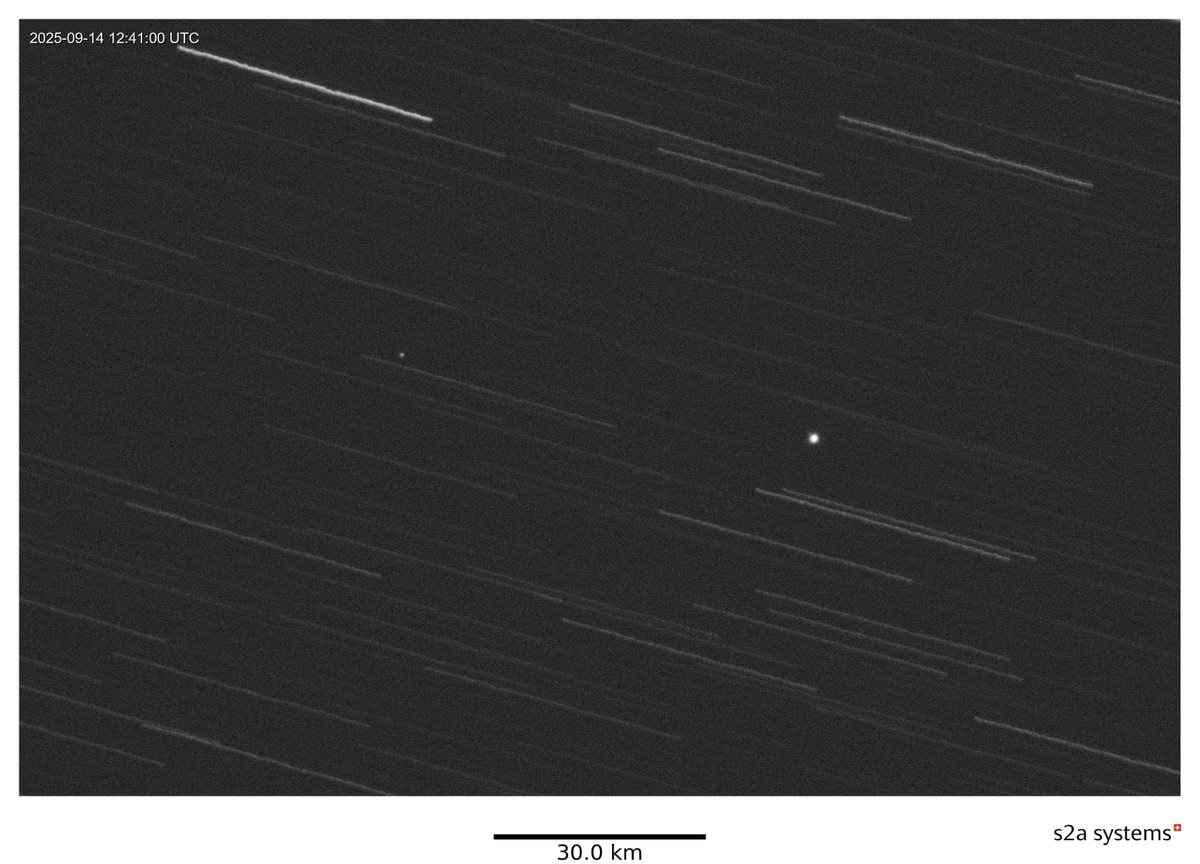
Take the recent story of Mozhayets‑6, an experimental satellite launched in September from a Russian military academy. Mozhayets‑6 was a tiny, very dim rideshare payload slipped into medium Earth orbit alongside a GLONASS nav satellite (the Russian GLObal NAvigation Satellite System). Common satellites are around +6 magnitude—this one was +16 - nearly 10,000 times more faint.
The primary craft showed up in public catalogs, but this new little passenger effectively didn’t. It was so faint that, for weeks, it was a ghost as far as the official lists were concerned.
Why is this interesting?
Because in the end, the “we found it” moment didn’t come from a classified, government-led space sensor; it came from commercial tracking outfits who already monitor those orbits for clients. They saw a faint, uncataloged speck moving in the GLONASS plane, reconstructed its trajectory and brightness, and concluded that it was the missing Mozhayets.
You see the same pattern with Russia’s Kosmos satellites, which keep showing up in orbital planes matched to U.S. spy sats. Russian experimentation with harder‑to-track satellites has been going on for a few years now, and independent trackers and commercial analysts were the first to flag the geometry, long before a Space Force officer turned it into a talking point. What used to be the sole domain of state intelligence is now something you can partly infer from data feeds and open tools.
Space awareness itself has turned into a commercial product. The same orbital picture can be sold to Space Force, NATO, insurers, and hedge funds. Governments still own the biggest sensors, but they’re writing strategy around buying answers from whoever can deliver them the fastest, even if that’s a venture‑backed company in an office park.
That means the tripwire for the next crisis in orbit might not be a red phone in a command center. It might be a data engineer on a Slack channel in Austin or Berlin saying, “New, very faint object detected co‑planar with a high‑value satellite.” And the people who see it first won’t just be generals... they’ll be anyone with the right subscription. (TO)