Noah Brier | February 26, 2026
The Non-Fungible Output Edition
On AI, artistry, and the new protectionism.
Noah here. I recently learned of Substack’s concept of “non-fungible writers” and haven’t been able to get it out of my head. As explained by investor Ben Horowitz:
[Substack] created this thing which they call the non-fungible writer, which is like: How many things in the newspaper could anybody write? And including AI, by the way. And how much is truly interesting and valuable? And they really wanted all the truly interesting and valuable […] people to build their own brands and their own businesses on Substack.
Non-fungible, of course, is a reference back (hopefully, maybe tongue-in-cheek) to NFTs and the crypto boom. But the core notion—that the vast majority of writers, even at major publications, are producing interchangeable articles—really struck me. Not just because it’s obviously correct, and because Substack has done an impressive job of gathering these so-called “non-fungible” voices and giving them a platform to profit from what makes them different, but because this framing gets at a core contention I have in this AI moment.
Why is this interesting?
Horowitz’s “and including AI, by the way,” nod deserves to be more than an aside.
One of the most powerful effects of these models—trained on effectively all human text and increasingly audio, video, and images—is that they’ve given us the clearest view ever of the median. “Mediocrity is now free,” is something my friend Mark D’Arcy, now Global Creative Director of Microsoft AI, has been saying for years. The fact that we can now get median output in practically any medium for a few dollars per million tokens is just the first-order effect. The second and third orders are how they make us look at the world we live in differently. AI is a mirror, not a crystal ball. It shows us what we already are.
The music industry is grappling with the same questions. Bandcamp, the platform that lets artists sell directly to fans, recently introduced a new anti-AI policy that has many in the music world cheering. An excerpt:
Our guidelines for generative AI in music and audio are as follows:
Music and audio that is generated wholly or in substantial part by AI is not permitted on Bandcamp.
Any use of AI tools to impersonate other artists or styles is strictly prohibited in accordance with our existing policies prohibiting impersonation and intellectual property infringement.
If you encounter music or audio that appears to be made entirely or with heavy reliance on generative AI, please use our reporting tools to flag the content for review by our team. We reserve the right to remove any music on suspicion of being AI-generated.
As Ghostly International founder Sam Valenti pointed out in a recent edition of his newsletter, Herb Sundays, beyond this new policy turning everyone on the platform into a witch hunter, the history of music is inextricably linked with technology:
The issue with focusing on inputs is that the music and art that form the bedrock of my passions come from cracked software, misused hardware, toys, hearsay, illegal samples, or electronic recreations of real instruments, most of which are as dim and cold as a robot’s thumb. It is the artist who organizes this immoral or amoral detritus into human shape.
Policies like Bandcamp’s confuse provenance with quality—suggesting that just because a human made it, it’s worth listening to. Isn’t that the enemy? The complaint this community has lobbed at modern music for a decade—that popification turned art into hit engineering, leaving us with a soup of sameness—is now aimed at AI. But the soup predates the tool.
The test isn’t whether you used AI. The test is whether AI could have done it without you. If you removed yourself entirely from the process, would the output be materially different? If not, you’re fungible. That was true before AI made it obvious. As Sam put it: “Culture fails, or should fail, because it’s of poor quality, not what tools it was made on.”
For the first time, we have a consistent benchmark for median: can an LLM naively generate it? If a model operating for pennies can produce something indistinguishable from your work, the work isn’t great.
Choosing to play guitar because it makes you happy doesn’t mean you make good music. The goal has always been to create something only you could have made—a privilege, not a right. AI doesn’t change that equation. It just makes the median visible.
A lot of this anxiety is wrapped up in a lack of historical context. Despite the fact that many readers will have spent some of their lives in the heyday of the newspaper business, that doesn’t make it the norm. For much of history, newspapers were owned and operated by the rich because they had no real business model. Similarly, while I came of age with Columbia House (when record labels were money printers) the vast history of music isn’t as a business, but something people did because it called them. In fact, the recorded music business is still a blip in history, as artists have long known. There’s no fundamental right to a business model: they come and go as technology and consumer preferences change, yet the artists find a way to forge ahead because of that passion.
Here’s Brian Eno, speaking about the recording industry in 2010:
I think records were just a little bubble through time and those who made a living from them for a while were lucky. There is no reason why anyone should have made so much money from selling records except that everything was right for this period of time. I always knew it would run out sooner or later. It couldn’t last, and now it’s running out. I don’t particularly care that it is and like the way things are going. The record age was just a blip. It was a bit like if you had a source of whale blubber in the 1840s and it could be used as fuel. Before gas came along, if you traded in whale blubber, you were the richest man on Earth. Then gas came along and you’d be stuck with your whale blubber. Sorry mate—history’s moving along.
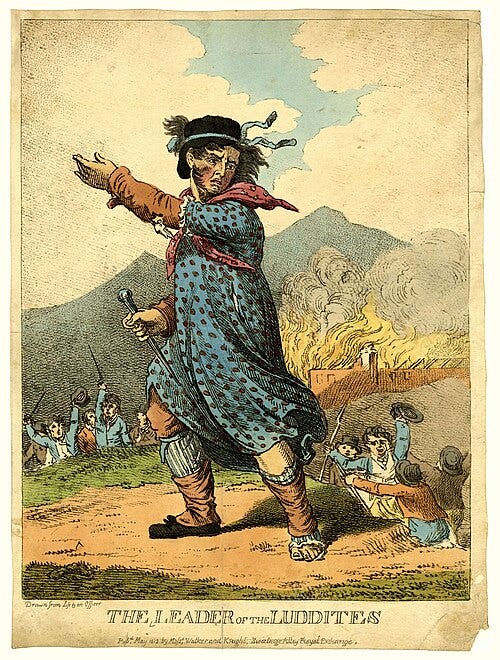
Every generation and new technology brings about lots of hand-wringing about how it’s going to kill what came before. Plato famously thought writing would spell the end of memory, and in his essay “The Work of Art in the Age of Mechanical Reproduction,” Walter Benjamin argued photography strips art of its “aura.” As Sam Valenti points out, there’s a good parallel back to the 1980s and hip-hop, which was first condemned as theft, and is now rightly held up as musicianship and creativity. New technology scares people, and that’s okay, but it’s also okay to point out that most of these historical critiques are fundamentally elitist. They’re protectionism dressed up as aesthetics. (NB)