Mark Slavonia | March 24, 2026
The Gregorian Calendar Edition, Part II
On Equinoxes (again), England, and Scotland.
Mark Slavonia (MJS) is an investor, a pilot, and an avid cyclist. He’s written plenty of WITIs, including several about time and timekeeping, such as the Tuesday, Noon Sundial, and 19th Century Party editions. He posts other things that are interesting on his website.
Mark here. Last week we wrote about the adoption of the Gregorian calendar in 1583 by Pope Gregory XII, which refined the schedule of leap years to more accurately reflect the length of the year, and corrected the creep of the calendar since the Roman Empire by jumping ahead ten calendar days.
As you can imagine, Protestant Europe was less inclined to follow the Pope’s directives on changing the calendar, and several countries, including England, clung to the less-accurate Julian calendar for decades.
Why is this interesting?
The use of different calendars created a confusing interregnum during which events happened on different dates depending on who was keeping score, England or Catholic Europe. For example:
The English defeated the Spanish Armada at Gravelines on July 29, 1588 (England) or August 8, 1588 (Europe)
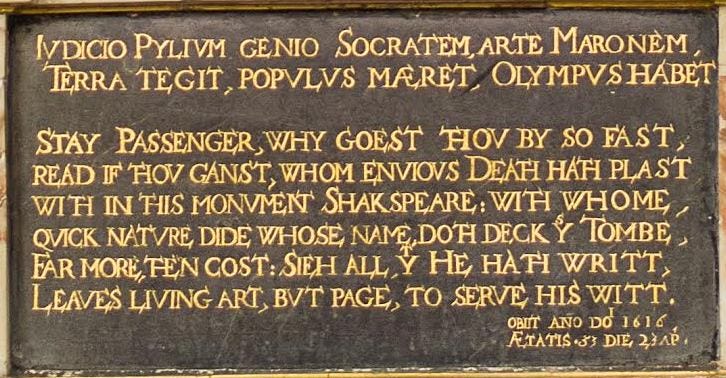
William Shakespeare died on April 23, 1616 (England), which was May 2, 1616 in Europe, though I suspect that they didn’t care much about Shakespeare at the time.
Isaac Newton was born in England on Christmas Day, December 25, 1642, a more memorable birthday than Europe’s January 4, 1643.

The Battle of Culloden was fought in Scotland on April 16, 1746 between the Great British government and the Jacobites led by Catholic Bonny Prince Charlie, who might have been more inclined to think of it as April 27th. By the Battle of Culloden, the calendars had moved another day apart. The year 1700 was a leap year in the older Julian calendar, but not in the modernized Gregorian calendar.
Great Britain knew that it had a problem and that its calendar was less accurate, but inertia is a powerful force, and calendar reform was deferred until 1751. By that time, the world was much more integrated, complicated, and literate than it had been in 1583, and the consequences of England’s obstinance in persisting with the old calendar were becoming too difficult to ignore.
In 1751 the English Parliament passed “An Act for Regulating the Commencement of the Year; and for Correcting the Calendar now in Use” stipulating that England would adopt the Gregorian calendar in 1753 (without using the Papist word “Gregorian”, of course). Fortunately for us, we can read the Act itself (linked above) in full. It’s not very long, and explains the reasons for making the change. Here’s are some excerpts:
…the Calendar now in Use throughout all his Majesty’s British Dominions, commonly called The Julian Calendar, hath been discovered to be erroneous … the said Error is still increasing, and if not remedied, would, in Process of Time, occasion the several Equinoxes and Solstices to fall at very different Times in the Civil Year from what they formerly did, which might tend to mislead Persons ignorant of the said Alteration … It will be of general Convenience to Merchants, and other Persons corresponding with other Nations and Countries, and tend to prevent Mistakes and Disputes in or concerning the Dates of Letters, and Accounts, if the like Correction be received and established in his Majesty’s Dominions: ’
The act also fixed an oddity, in which the new year began on March 25th, hence that whole “Regulating the Commencement of the Year” bit, but that’s a WITI for another day.
The act gamely provided a concise but reasonable framework for dealing with matters such as leases, rents, contracts and other legal issues that might be affected by the insertion of eleven extra days in the calendar. There was some opposition to the act, centered on the idea that it would generally just be too much of a bother, and some made dire warnings of riots and civil unrest, but those fears were largely overblown. (In this story I hear echoes of the Y2K technical problems that were mostly avoided by good sense and a lot of preventative work.)
How, then, are we to know if a dated event that occurred between 1573 and 1753 is being reported in the Julian or the Gregorian Calendar? The convention arose that the modern calendar would be called “New Style” dating in England, or “N.S.” and the older Julian calendar would be called “Old Style” or “O.S”. Whenever confusion is likely, or when historians are being careful, dates will often be noted as N.S. or O.S. Thus, Isaac Newton’s birthday is December 25 (O.S.) or January 4 (N.S.).
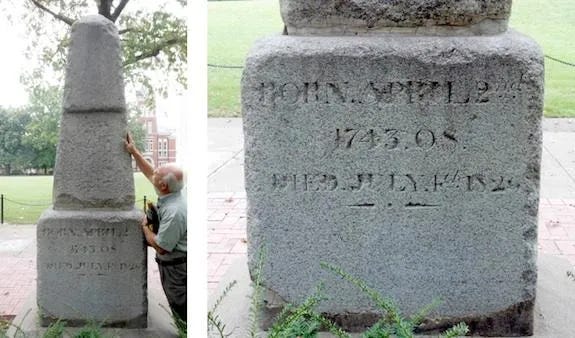
Another trick is to consider who is telling the tale. Events such as Shakespeare’s death, which mostly impacted England, are likely to be reported in the calendar of the place where the event happened. Cross-border events like the Spanish Armada are more confusing. If history is written by the winners, they probably pick the dates. (MJS)