Mark Slavonia | March 12, 2026
The Gregorian Calendar Edition
On Equinoxes, Easter, and ten lost days.
Mark Slavonia (MJS) is an investor, a pilot, and an avid cyclist. He’s written plenty of WITIs, including several about time and timekeeping, such as the Tuesday, Noon Sundial, and 19th Century Party editions. He posts other things that are interesting on his website.
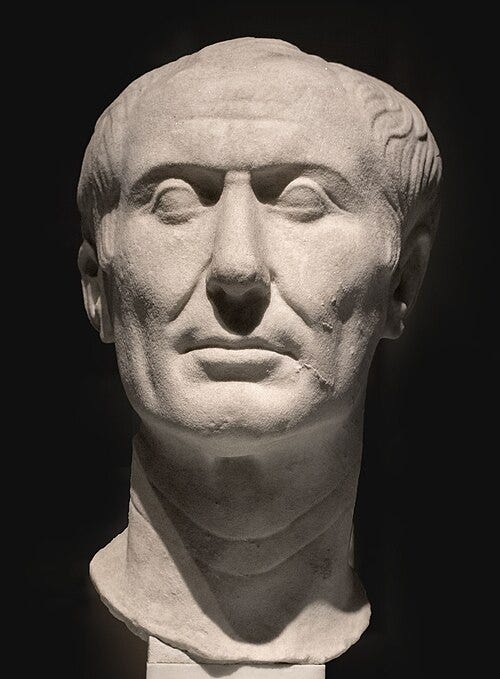
Mark here. A solar year on Earth lasts 365.2422 days. Impressively, astronomers in the Roman Empire knew that the year was a little longer than 365 days, so they added a leap day every four years in the Julian calendar (named after Julius Caesar). Equally impressively, the Julian Calendar was used to mark time in Europe for the next 1,500 years. The names of some of the months changed, but our familiar pattern, “30 days hath September,” was set in place.
Why is this interesting?
By the 1500s, the incredibly slight discrepancy between the actual length of the solar year (365.2422 days) and the average length of the Julian calendar year (365.25 days) had created some problems.
The Julian calendar added too many leap days, causing the actual spring equinox, which is used to determine Easter Sunday, to drift approximately ten days away from its designated date, March 21, first specified by the Council of Nicaea in 325 C.E.
To explain, I hope the reader will tolerate a little arithmetic.
365.25 days (Julian Year) - 365.2422 days (actual solar day) = 0.0088 days
0.0088 days x 1,200 years from 325 C.E. to 1500 C.E. = 10.56 days
In 1545, The Council of Trent directed Pope Paul III to reform the calendar and fix the Easter problem. By dying in 1549, Paul missed out on the chance to establish a Paulian calendar, as did several short-timers who succeeded him:
Julius III (Pope 1550-1555), who could have replaced the Julian calendar with the Julian III calendar
Marcellus II (22 days in 1555), would have presented the Marcellian calendar, but he’d have needed to work fast
Paul IV (1555-1559) The Paulian Calendar, again
Pius IV (1559-1565) The Pius Calendar, has a nice ring to it
Pius V (1565-1572) Another missed opportunity for a Pius Calendar
All this time, the calendar reform committee, with help from leading mathematicians and astronomers of the time, did slow but excellent work. The solution they eventually settled on was pretty simple: Move the date forward ten days to reset the calendar, so that March 21 fell on the spring equinox. Then, continue to have a leap day every four years on multiples of four, as in the Julian Calendar, except that years divisible by 100 would not be leap years (e.g. 1700, 1800, 1900), while years divisible by 400 would be leap years (e.g. 1600, 2000.)

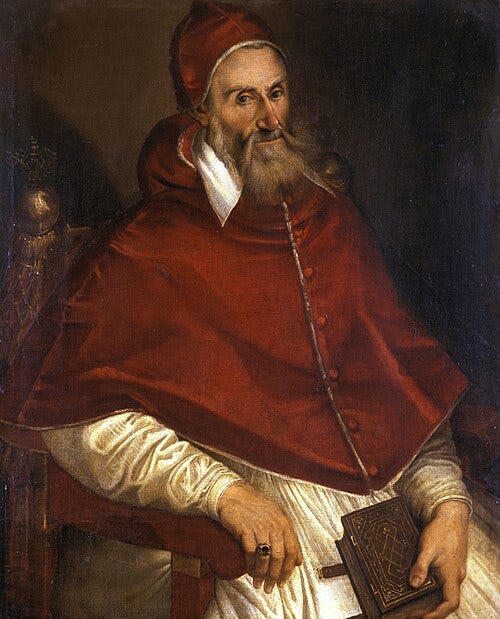
Pope Gregory XIII was lucky to be pope at the time this was settled, and wise to advocate for its adoption, stamping his name onto the Gregorian calendar for as long as it shall last. He announced the new calendar in February, 1582. With the political backing of Catholic monarchs, led by Philip II of Spain, it was rapidly implemented, and thus Thursday, October 4, 1582 was followed by Friday, October 15, 1582, and the era of the Gregorian Calendar began.
Satisfyingly, the Gregorian calendar we adhere to today is accurate to within approximately one day every 3,000 years. It would be good news for the continuity of our civilization if it endured long enough for equinox drift to once again be a problem. (MS)