Noah Brier | March 19, 2026
The Digital Omotenashi Edition
On invisible decisions, Google Maps' lane guidance, and anticipation vs. personalization.
Colin here. Anyone who has been on the receiving end of Japanese hospitality (known locally as Omotenashi) has felt it. Small, subtle gestures that anticipate your needs, long before you realize you have them.
Nothing is announced, and nothing is explained. The service is so precisely calibrated to your unspoken state that it registers less as hospitality, and more as a kind of ambient intelligence.
We’ve written about this a lot in the past. Omotenashi has no perfect, on the nose English translation. “Hospitality” is too reciprocal. “Service” too transactional. Omotenashi is the art of anticipating a need before the need becomes conscious, and crucially, doing so without calling attention to itself.
Digital design has been trying to approximate this for years. It has mostly failed, and the failure is quite instructive.
Why is this interesting?
The dominant paradigm for digital “personalization,” the word the industry settled on, is the opposite of omotenashi in almost every important way. For one thing, it announces itself (“Because you watched...”). It benefits the platform first, and the user second. It mistakes behavioral data for understanding, and it arrives with a kind of transactional visibility that Omotenashi specifically refuses: The ryokan host doesn’t tell you she noticed you looked cold.
Are there experiences of digital done well, and with a similar mindset? As it turns out, it’s already happening—in small places, and mostly unnoticed, which is, of course, exactly the point.
Monzo, the UK challenger bank, quietly translates the merchant garble on your bank statement. SQ*COFFEEBEANLTD 08231 becomes “Coffee Bean & Tea Leaf,” without ever telling you it’s doing this.
Apple’s built-in accessibility features do something similar. Reduce Motion, the setting that tames interface animations for users with vestibular disorders, can now be triggered automatically based on system signals before a user even knows it exists. That’s closer to empathy than a product experience.
My personal favorite is a small thing some sites do after you change your password that almost no one talks about: They keep you logged in. Not as a security lapse, but as a decision. You went through the flow, you did the work, you were already verified at every step of it. The old paradigm kicks you out anyway, forces you back through the login screen with your new credentials, and treats the session as contaminated by the change. The better paradigm simply continues. You changed your password; the site noticed. It understood that the act of changing it was itself the authentication. It’s a decision likely argued for by one engineer against the default, and most users will never consciously register it, which is, again, exactly the point.
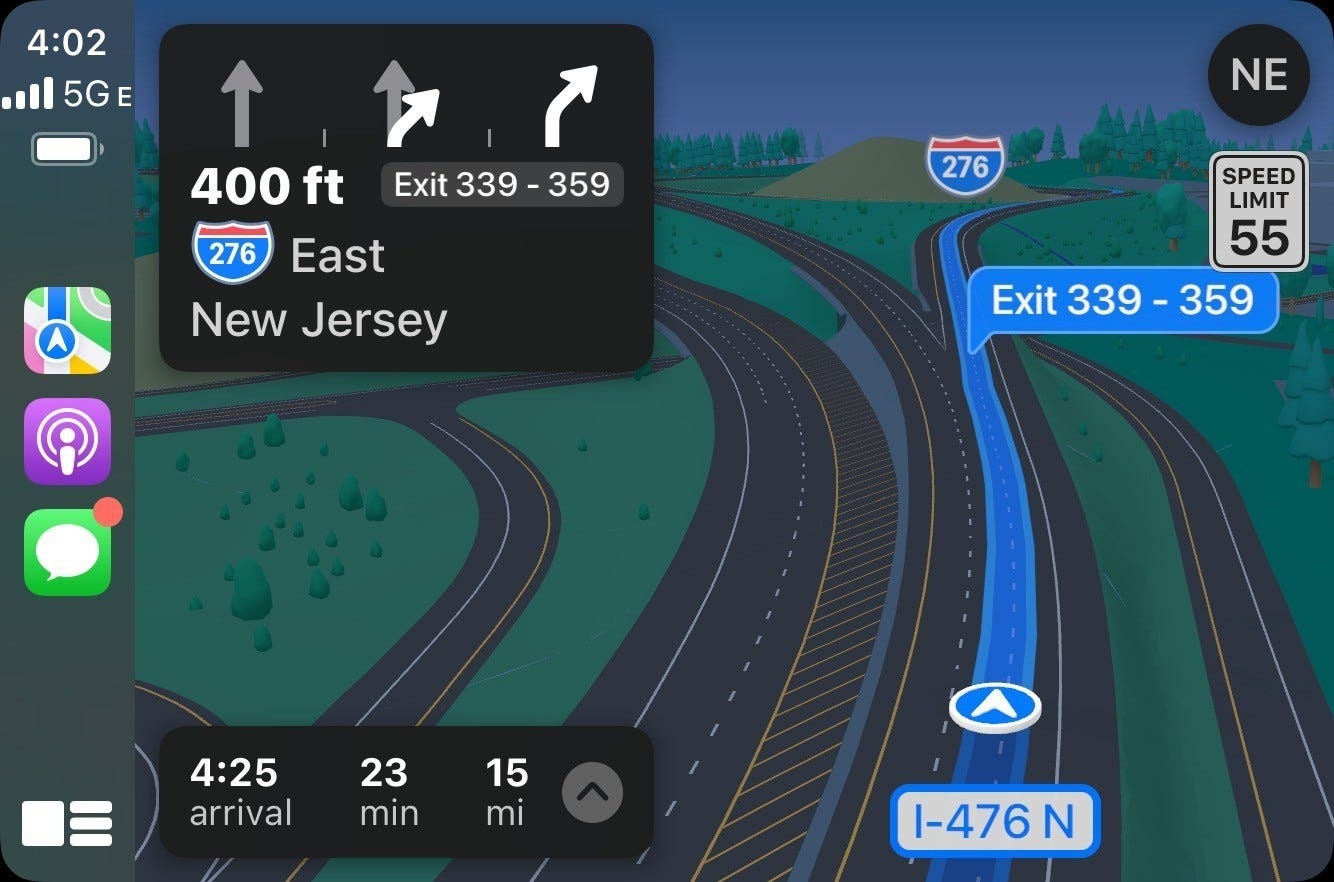
Another subtle yet beautiful example is Google Maps’ lane guidance. At some point, most users can’t tell you exactly when, it started telling you which lane to be in a mile before your exit. Before the anxiety of the offramp. It had modeled the shape of your stress before you felt it.
The commonality here is that the intervention is invisible until it’s already worked. You don’t see the logic scaffolding, you just find yourself in the right place.
The ugly contrast is that most of what we call personalization is extraction dressed as service. Data flows toward the platform, and the anticipation is in service of conversion. Netflix or Amazon knows what you’ll want next, because it wants to sell it to you or keep you locked in watching. Knowing and selling are inseparable. Omotenashi, in its Japanese form, has no such ambiguity. The host’s anticipation is entirely in service to the guest. The asymmetry runs in one direction only.
Maybe the reality is that genuine digital omotenashi is only possible in small doses, at the edges of products, where a thoughtful designer made a quiet decision to serve the user before the business, and then said nothing about it. The rest is just personalization. (CJN)