Michael Hastings-Black | May 19, 2026
The World Cup Squad Edition
On diaspora, dual-nationals and new types of tournament teams.
Michael Hastings-Black (MHB) is a researcher & brand strategist. He runs the agency AskMHB, and hosts the interview series Spin That Bottle. His past contributions to WITI include the Antimatter Road Trip, Dead Cinderella and Inherited Ceramics editions.
Michael here. Like billions of people, I love the World Cup and have core memories tied to each edition. Where I watched games, and with whom, serve as time capsules in my life.
Also, like billions of people, I’m angry about the 2026 edition. FIFA is greedy, the ticket prices are obscene, and the purchase process is a mess. The expansion from 32 to 48 teams was unnecessary. And to top it all off, the USA is currently a poor host for this glorious, global party.
In order to still enjoy it, I’ve sought to find a silver lining. What’s different, I wondered, about the 2026 edition? My answer starts with Curaçao.
The island country qualified for this World Cup in November. It has a population of 156,000 and little soccer infrastructure. It’s the smallest nation in both population and geographical area ever to qualify for a World Cup, breaking a record Cape Verde had set…just five weeks prior.
Why is this interesting?
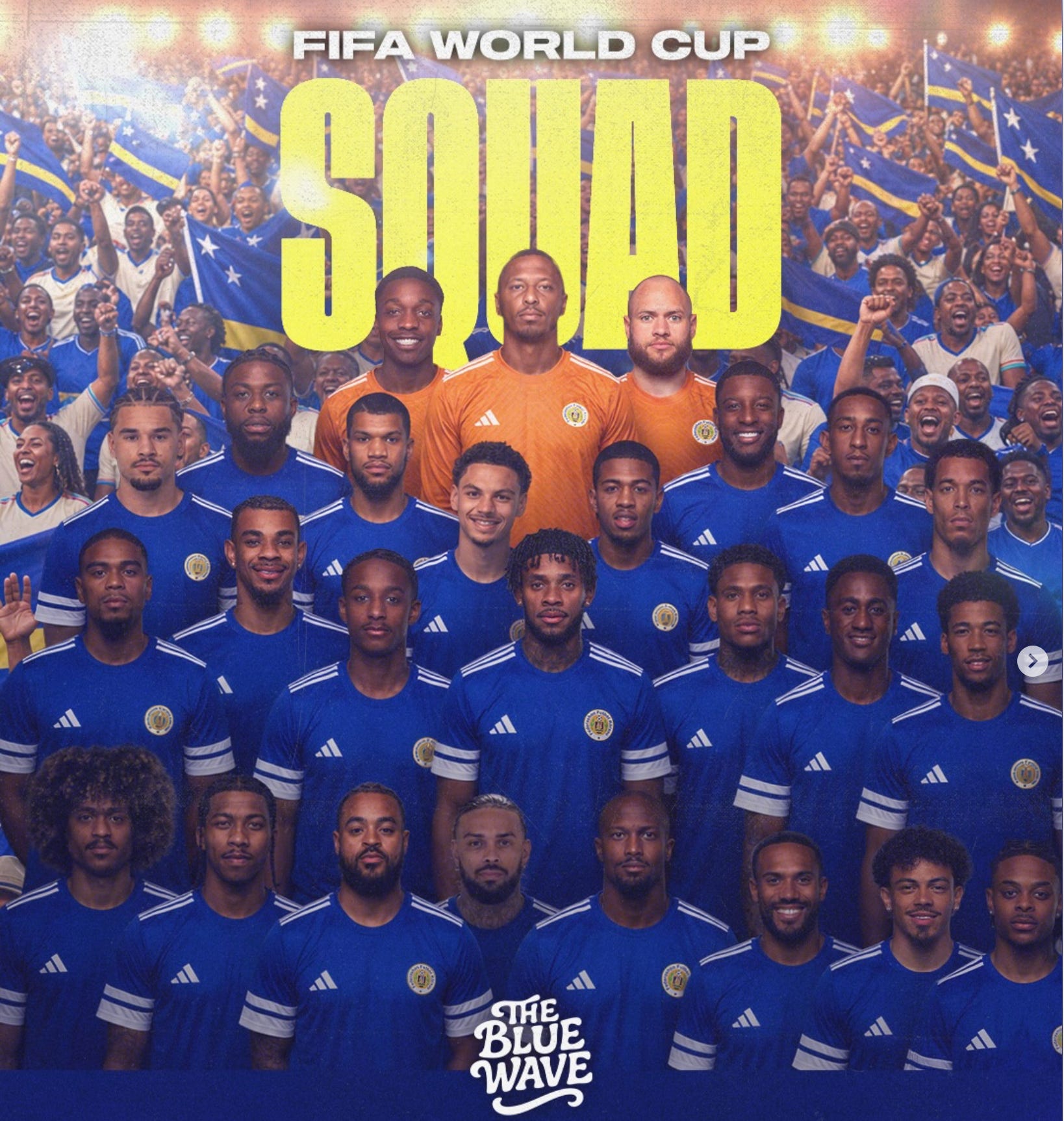
Because Curaçao’s squad is built almost entirely with players born, raised, and trained in the Netherlands.
In the 2022 World Cup, 16% of all players represented a country other than the one they were born in, the highest in the history of the tournament. Morocco led all teams, with 14 of 26 players foreign-born amongst the Moroccan diaspora in soccer powers like France, the Netherlands and Spain. They reached that tournament’s semifinals, winning hearts and minds along the way.
Now with 48 teams in the tournament, the 2026 edition could set a new record for the percentage of foreign-born players. Often, the less developed a country’s domestic soccer infrastructure, the higher its percentage of foreign-born players, connected by their parents and grandparents. All but one of Curaçao’s squad was born in the Netherlands. About 75% of the Cape Verde roster comes from the diaspora, and Haiti’s is close to 85%.
Players tend to end up playing for their non-birth nation for one of three reasons, depending on their ability.
The first is shown in Morocco’s success. Sofyan Amrabat, who anchored their 2022 run, was approached by both the Netherlands and Morocco, and made a genuine choice: “My parents are Moroccan and my grandparents are Moroccan. Every time I go there I can’t describe the feeling inside me in words: it’s my home,” he said. Hakim Ziyech, Achraf Hakimi, and others were good enough to play for European nations, but also opted for Morocco. They are the first great modern national team truly galvanized from a diaspora by choice.
The second is one we’ve seen at many tournaments. Mid-tier teams like the USA often feature players born and raised in Europe and the UK, who choose the USA for the opportunity to star in the set up. Some likely US Men’s National Team examples for 2026 are Antonee Robinson, Folarin Balogun and Sergiño Dest. They’re focal points of the USMNT, whereas they might be closer to the fringes of England or the Netherlands. Another variation on this is seen with African teams that have a raft of players who grew up in France. The French talent pool is arguably the deepest in the world, so making the cut for Les Bleus is about as hard as it gets.
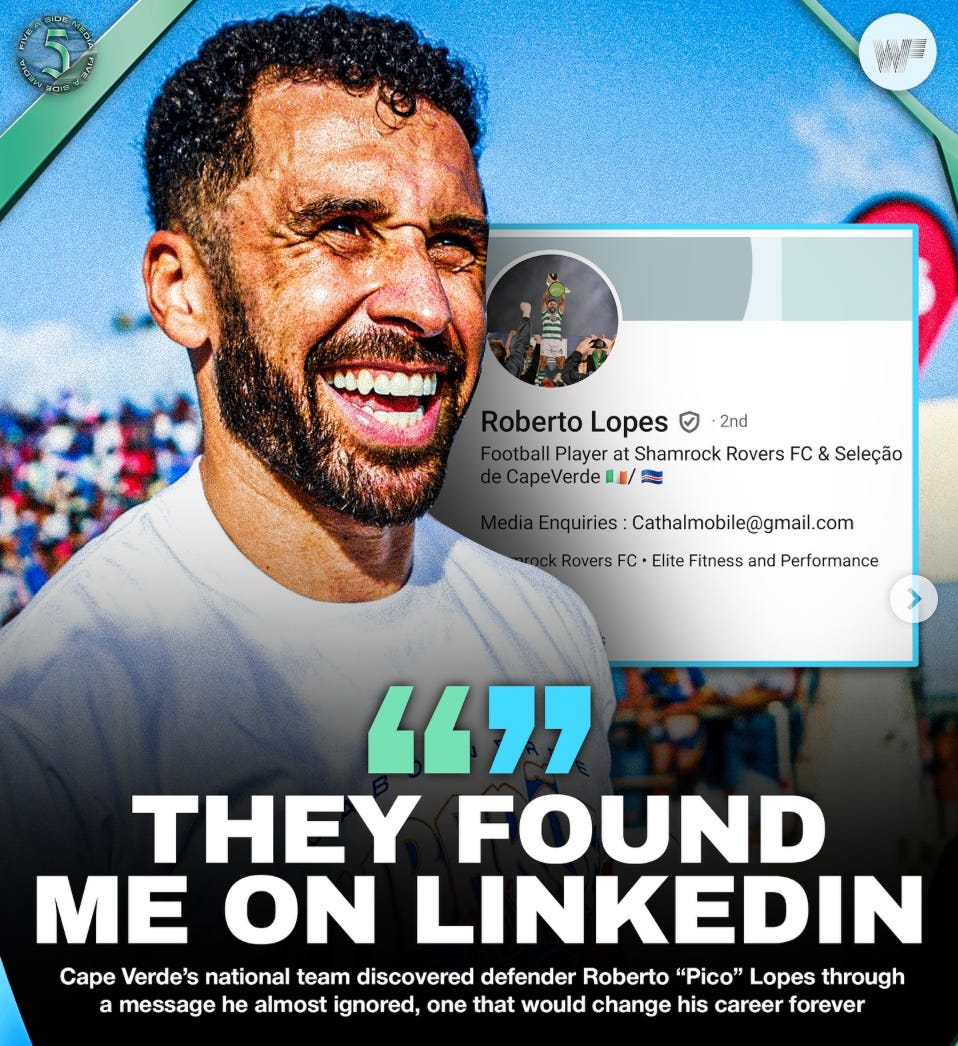
The third is Curaçao’s story, representing what I think is a new chapter in World Cup history. The players on Curaçao and Haiti weren’t turning down call-ups from the Netherlands, France or even the USA. They’re good enough to play professionally, but almost none would make the roster for their birth country. Representing the country of their parents or grandparents didn’t require a choice between equally appealing options, but it did provide the opportunity of a lifetime. One great example of this is Cape Verde’s Roberto Lopes, who was born in Ireland and plays for Shamrock Rovers in the League of Ireland. The Cape Verde coach reached out to him via LinkedIn. Lopes wasn’t going to make the Irish national team, so he changed course. He, and Cape Verde, will be playing in the World Cup this summer. He’s the first ever player from the League of Ireland to make a World Cup squad. And the Irish national team will be watching from home.
The expansion to 48 teams has created a new dynamic where historically small teams will likely make the tournament in the years to come. And with this, talent from the lower divisions of soccer powerhouses can be captured by those small nations with ancestral links. This summer, players from places like the English 3rd tier, the Dutch 2nd tier and the USA 2nd tier will walk out en masse for their first World Cup match. While it might not make for the best product on the pitch, in a tournament clouded by avarice, these opportunities, and stories, are the stuff of dreams. (MHB)
WITI’s Noah Brier has started a new podcast and publication called Forward Deployed, at the intersection of AI, engineering, and enterprise. It’s a home for conversations about what’s happening in the trenches as companies work through adopting AI. He’s particularly interested in what we can learn from other industries—especially creative ones—about creating aligned, agentic systems. Subscribe and join him in the journey here.