Perry Hewitt | January 13, 2026
The Dinky Toy Edition
On era-specific toys, collecting, and faithful miniatures.
Perry Hewitt (PH) brings modern marketing and digital product practices to mission-led organizations. As the Chief Marketing and Product Officer at data.org, she focuses on building capacity and community to advance data for social impact.
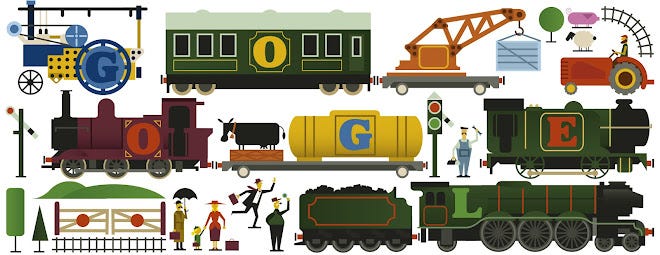
Perry here. I first learned about Dinky Toys when my late husband re-surfaced his collection. (It had been relegated to boxes in the back of our basement.) Born in 1944 to a British mother, Rob had been gifted these toys from birth until his early teens; like many boys his age, he spent hours re-enacting live action scenes, from elaborate battles to London bus routes. While he purchased additional Dinky Toys on and off over the years, it wasn’t until his retirement that he returned to enjoying his collection.
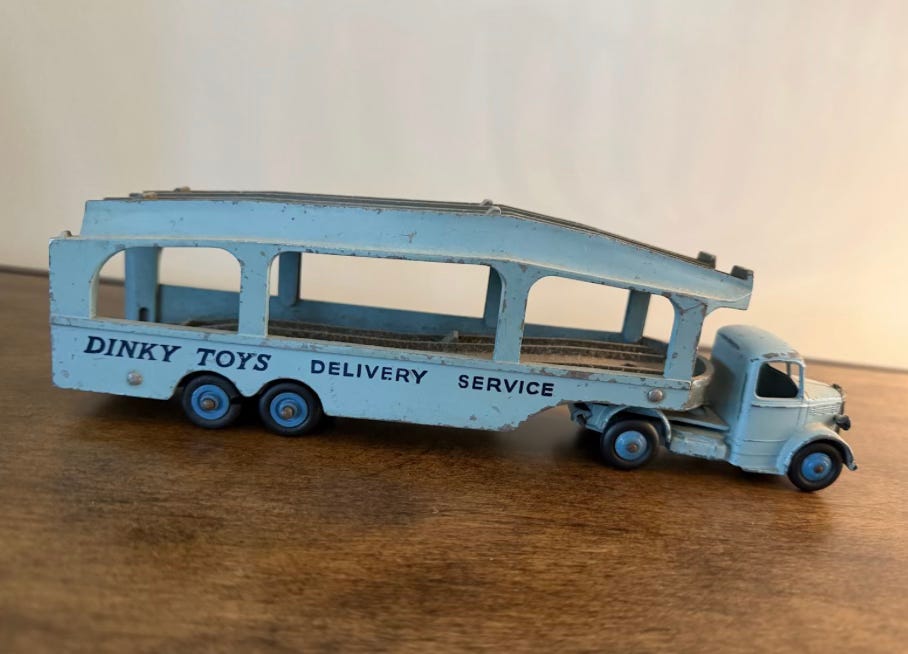
Dinky Toys were die cast, zinc alloy models first made in Liverpool, England in 1934. The models stood out for their attention to detail in replicating real vehicles: cars, trucks, buses, planes, construction and military vehicles.
They were the brainchild of a man named Frank Hornby, a clerk turned inventor who in 1908 founded the Meccano Company (maker of the wildly popular Meccano building sets) and Hornby Rail. Despite his lack of formal training, Hornby left an outsized impact on 20th-century industrial design and play, and fueled a collecting craze for children and adults alike.
Why is this interesting?
Dinky Toys were among the first mass produced, affordable replicas that became collectibles. They became popular quickly; they were sturdy enough to play with but did not look or feel like (solely!) children’s toys. The individual pieces were remarkable for their attention to detail -- they were faithful replicas of the larger world, down to moving parts and colors.
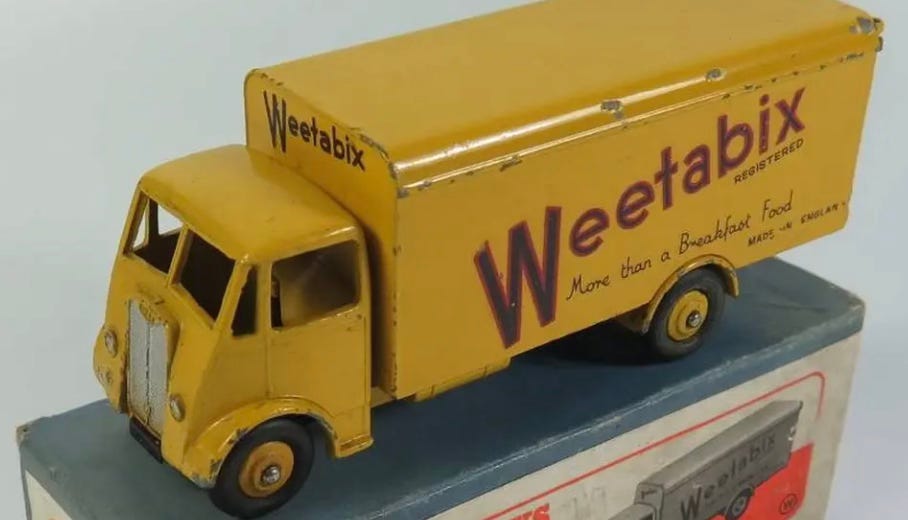
The vehicles they chose to replicate were also interesting. Meccano created models that reflected the vehicles people saw in the street and brands they consumed in their homes, like the Weetabix truck below. Each Dinky Toy reflected the time period it represents: automotive trends, military history, and even the post-war economic climate of increased brand consumption.
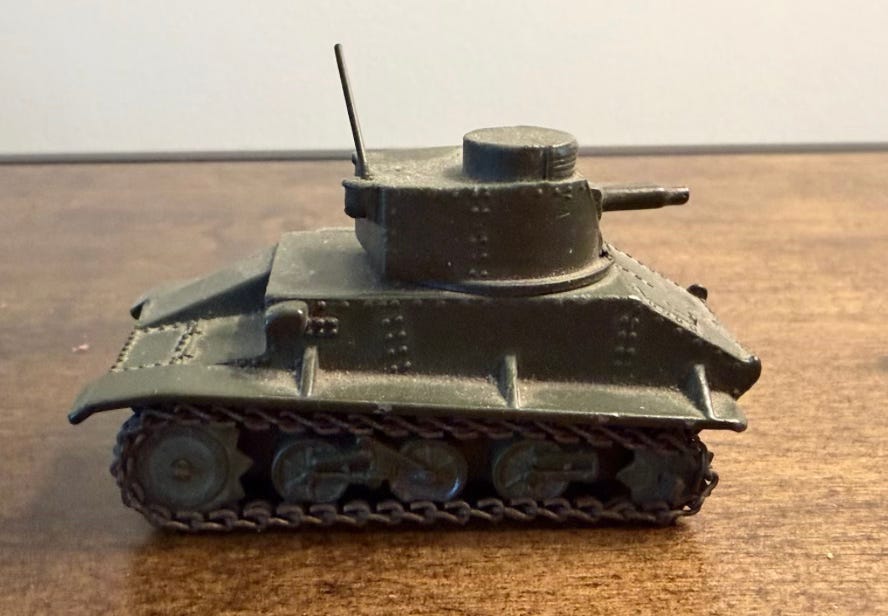
During the war years, these replicas became ways to express patriotism. While production paused from 1941-45, popularity increased along with post-War economic growth. The military vehicles were not only British, but also featured those from other countries, extending Dinkys’ appeal abroad. The tank below is durable, and simply just fun to play with—75+ years after it was created, that turret at the top still rotates, and the small chain still moves easily around the wheels!
Launched towards the end of the Depression in the UK, Dinky Toys were part of the rise of the culture of collecting among the middle class, The wide range of accurate replicas tapped into a strong sense of nostalgia, both for childhood play and for the classic automotive designs of their era as the middle classes had more income for collecting. Then, in 1969, Mattel entered the UK market, and the Liverpool factory closed a decade later. Today, the rights to the “Dinky Collection” are owned by Matchbox Collectibles Inc—a part of Mattel—and popular early models continue to be available at auction. (PH)
Bonus links: